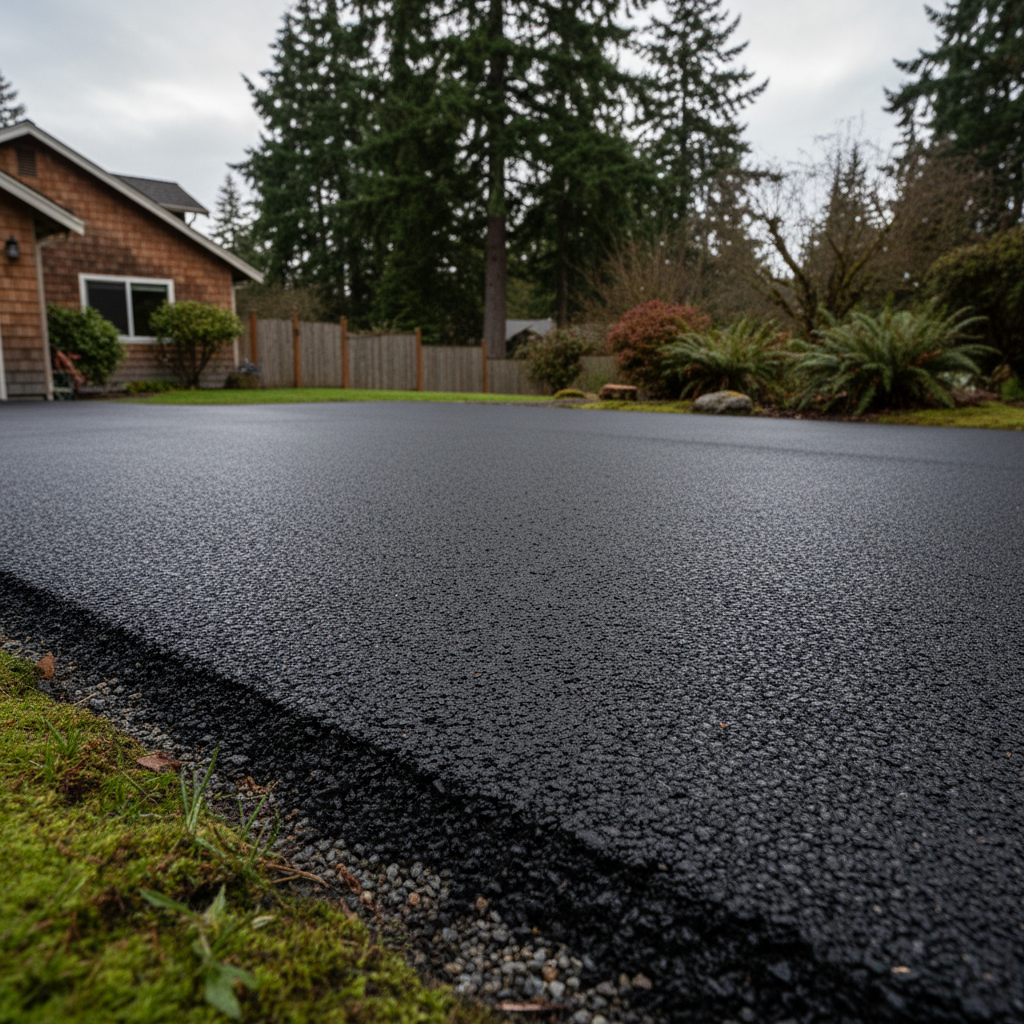
You've got questions about your asphalt driveway, and I get it. It's a big investment, and you want to make sure you're doing things right. Over the years, working all over Seattle — from the steep hills of Queen Anne to the flat lots in Ballard — I've heard pretty much every question under the sun about residential asphalt. So, I figured I'd put together a straightforward FAQ based on what homeowners like you actually ask me.
How long should a new asphalt driveway last?
This is probably the most common question I get. A properly installed asphalt driveway, using good quality materials and done by a reputable crew, should easily last you 20 to 30 years. That's assuming you're doing some basic maintenance, like sealcoating every few years and patching any small cracks when they pop up. If you just let it go, you'll be replacing it a lot sooner. Think of it like your car – you wouldn't expect it to last without oil changes, right? Same deal with your driveway.
What's the deal with drainage? Does it really matter that much?
Absolutely, drainage is huge, especially here in Seattle with all the rain we get. If water sits on your asphalt, it's going to find its way into cracks, freeze in winter, expand, and then you've got potholes and bigger problems. We always make sure to grade the sub-base correctly so water flows away from your house and off the driveway. Sometimes that means installing a drain or a swale. Don't let anyone tell you drainage isn't a priority; it's critical for the longevity of your pavement.
My driveway has cracks. Do I need to replace the whole thing?
Not necessarily. Small cracks, especially hairline ones, are pretty normal over time. We can usually fill those with a good quality crack filler. If you've got alligator cracking – that pattern that looks like alligator skin – that's a sign of a more serious sub-base issue or just aging asphalt that's lost its flexibility. Even then, sometimes a patch or an overlay can buy you a few more years. We'd need to come out and take a look to give you an honest assessment. Don't wait too long though; those small cracks become big problems fast.
How long after installation can I drive on my new asphalt driveway?
This is important. You've got to give it time to cure. For a new residential driveway, I usually tell folks to wait at least 3 days, and ideally 5 to 7 days, before driving on it. It might look hard, but it's still soft underneath and needs to set properly. If you drive on it too soon, especially heavy vehicles, you can create ruts or depressions that will be there forever. And try not to park heavy vehicles in the same spot for extended periods during the first few weeks, especially when it's hot out. The asphalt is still hardening up.
What's the difference between asphalt and concrete? Why choose asphalt?
Good question. Concrete is rigid, durable, and can last a very long time, but it's generally more expensive to install and repair. It also cracks differently – usually in straight lines. Asphalt, on the other hand, is more flexible, which helps it handle our freeze-thaw cycles a bit better without cracking as dramatically. It's typically quicker to install and less expensive upfront. Repairs are also easier and blend in better. For a driveway, asphalt often provides a smoother, quieter surface. It's a solid choice for residential use, offering a great balance of cost, durability, and repairability.
When's the best time of year to get a new asphalt driveway installed in Seattle?
We need dry, relatively warm weather for asphalt installation. That means late spring, summer, and early fall are ideal here. We're talking June through September, maybe into October if we get a nice dry stretch. You want the ground to be dry, and the air temperature needs to be above 50°F, ideally warmer, for the asphalt to compact properly and cure right. Trying to do it in the middle of our rainy season or when it's too cold is just asking for trouble and a job that won't last. We're always watching the forecast closely for our clients at Summit Asphalt Solutions to make sure we hit that sweet spot.
Can I put a basketball hoop or heavy RV on my asphalt driveway?
You can, but you need to be mindful. For a basketball hoop, if it's portable, try to move it around a bit, especially in the first year or two, so you don't create permanent indentations. If it's a fixed pole, make sure the base is stable and distributes weight well. As for an RV or other heavy vehicles, a well-built residential asphalt driveway can handle it. However, parking a very heavy RV in the exact same spot for months on end, especially in the summer heat, can cause depressions. If you know you'll be parking something heavy long-term, it's worth mentioning it when you're getting a quote. We might recommend a slightly thicker base or asphalt layer in that specific area to handle the concentrated weight better.
Hopefully, this clears up some of the common questions you might have had. If you've got more, don't hesitate to reach out. That's what we're here for.