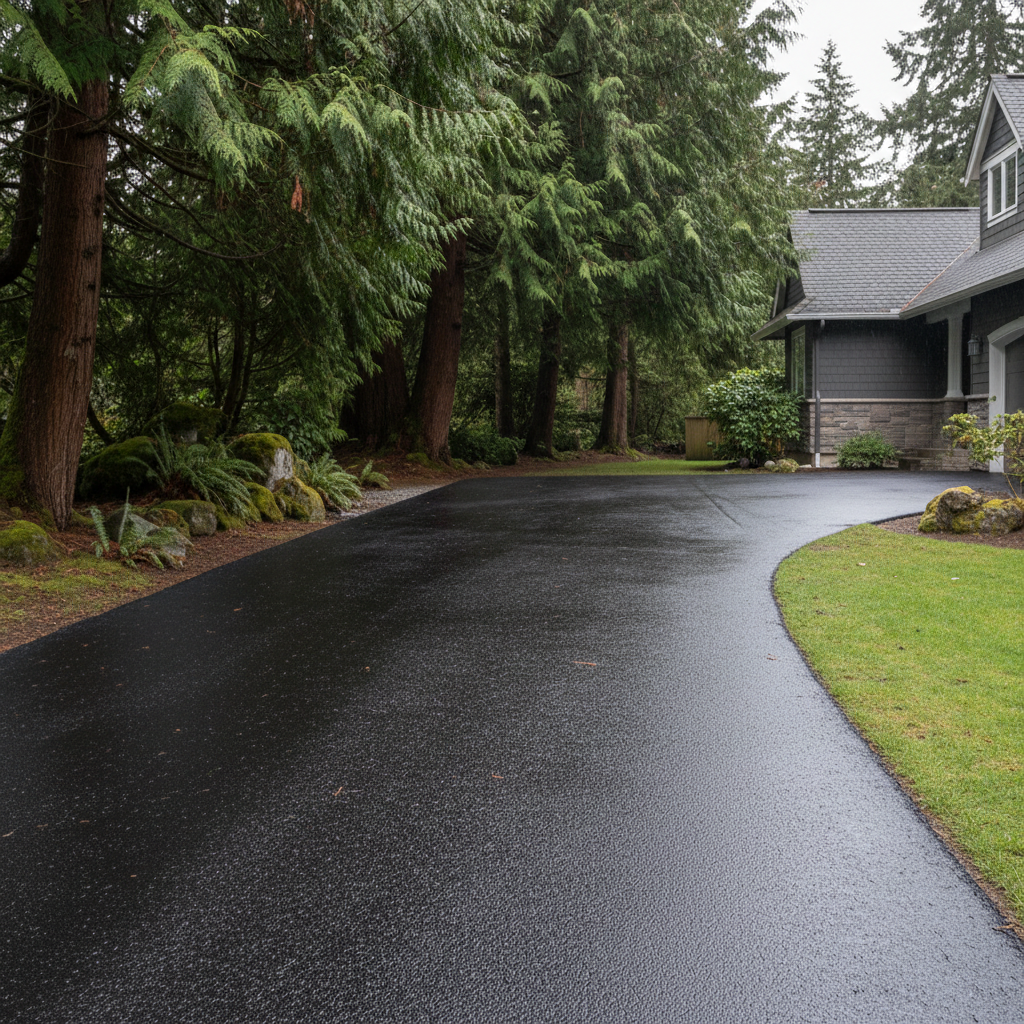
Let's talk about keeping your asphalt driveway in top shape. You've invested in a good surface, and you want it to last, especially with the kind of weather we get here in Seattle. It's not just about looking good, either; proper maintenance means avoiding bigger, more expensive problems down the line. Think of it like changing the oil in your car – a little preventative care really goes a long way.
Understanding Seattle's Climate Impact on Pavement
Our climate here in the Pacific Northwest is a big factor, no doubt about it. It's not the extreme heat or cold that causes the most trouble, but that constant dampness and those freeze-thaw cycles. That persistent rain we're known for, especially from October through May, can seep into tiny cracks. Then, if we get a cold snap, that water freezes, expands, and turns those little cracks into bigger ones. It's a relentless process. That's why being proactive with your driveway care is crucial.
Regular Maintenance: Your Pavement's Best Friend
You don't need to be out there every day, but a little routine attention makes a huge difference. Here's what I tell folks:
Keep it Clean: Sounds simple, right? But dirt, leaves, and debris can trap moisture against the asphalt, which speeds up deterioration. Sweep or blow off your driveway regularly. If you've got moss or algae starting to grow, especially in shadier spots like under big maple trees in neighborhoods like Ballard or West Seattle, get rid of it. Those organisms hold moisture and can break down the surface.
Address Spills Immediately: Oil, gas, and other automotive fluids are asphalt's enemy. They break down the binder that holds the aggregate together. If you see a spill, clean it up as quickly as you can. A little kitty litter or absorbent material can do the trick, followed by a good scrub with a stiff brush and a mild detergent.
Edge Control: Keep vegetation from growing into and over the edges of your driveway. Roots can cause significant damage over time, lifting and cracking the asphalt. A clean edge also helps with drainage.
Sealcoating: This is probably the most important regular maintenance step. Think of sealcoating as sunscreen for your driveway. It protects the asphalt from UV rays, water penetration, and chemical spills. For residential driveways, I usually recommend sealcoating every 2-3 years. It's a relatively inexpensive way to extend the life of your pavement by many years. Summit Asphalt Solutions does a lot of this work, and we've seen firsthand the difference it makes.
Warning Signs You Shouldn't Ignore
Your driveway will usually tell you when it needs more than just routine cleaning. Pay attention to these:
Cracks: Small hairline cracks are normal as asphalt ages, but if they start to widen or connect, that's a problem. They're pathways for water to get underneath and wreak havoc. Don't let them get bigger than a quarter-inch wide without addressing them.
Potholes: These are usually a sign that water has gotten under the surface, frozen, expanded, and then the surface has collapsed under traffic. Potholes only get worse, fast. They're a trip hazard and can damage your car.
Fading or Graying: If your asphalt is losing its rich black color and starting to look gray, it means the binder is oxidizing. This makes the surface brittle and more susceptible to cracking. It's a clear signal that it's time for sealcoating.
Drainage Issues: Puddles that linger for hours after a rainstorm are a red flag. Water sitting on your driveway will accelerate deterioration. It could be a sign of settlement or an underlying drainage problem that needs to be fixed.
Alligator Cracking: This looks like a series of interconnected cracks resembling an alligator's skin. It indicates a failure in the base layer beneath the asphalt and usually requires more extensive repair than just crack filling.
When to Call a Professional
You can handle a lot of the basic stuff yourself, but some problems are best left to the pros. If you see:
Widespread cracking or potholes: A few small cracks you can probably fill yourself, but if your driveway looks like a spiderweb or has multiple potholes, it's time for an expert assessment. We have the right equipment and materials to do a lasting repair.
Significant drainage problems: If water isn't shedding off your driveway properly, it's often a sign of sub-base issues or improper grading. This isn't a DIY fix; it needs professional evaluation to prevent future damage.
Alligator cracking: As I mentioned, this usually means the base is failing. Trying to just patch over it won't solve the underlying problem, and you'll be patching again in no time. You'll likely need a section of your driveway removed and rebuilt.
You're unsure: Honestly, if you're looking at something and thinking,