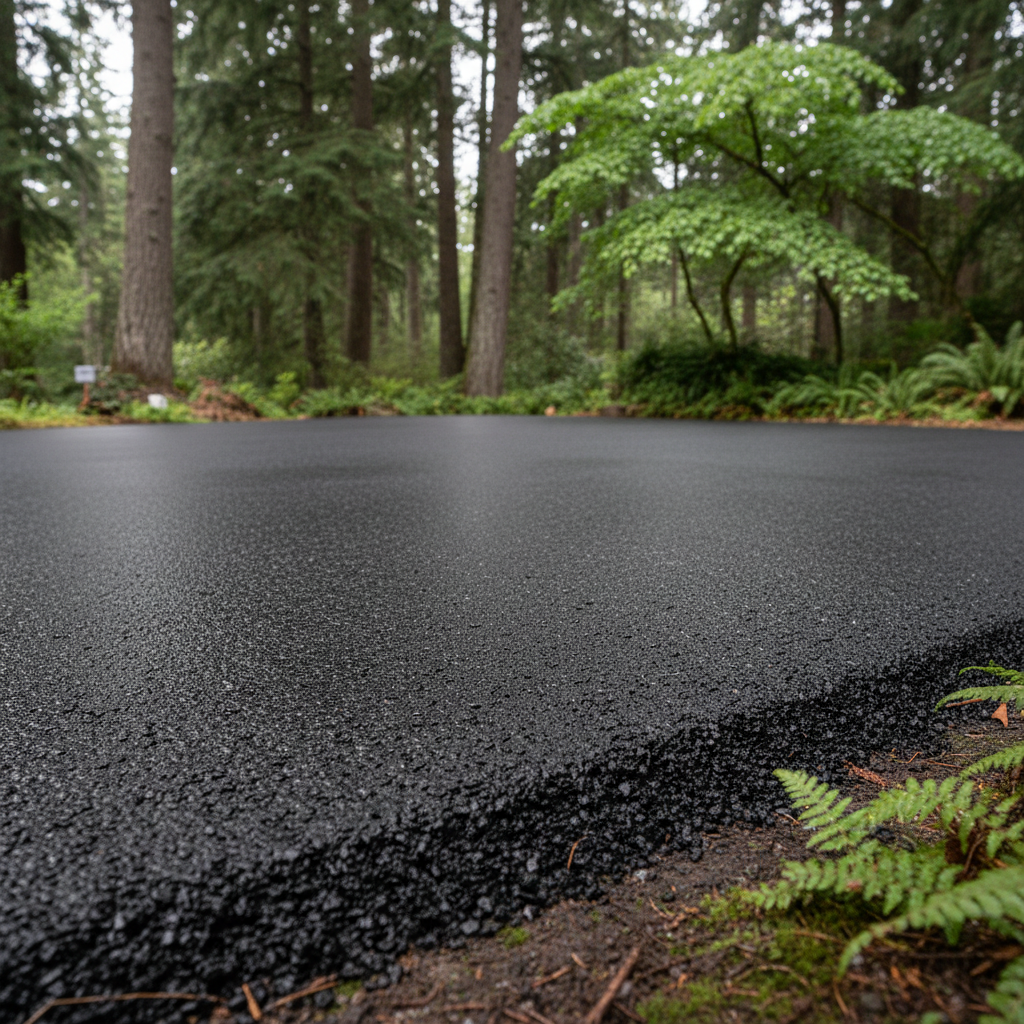
What's the real difference between asphalt and concrete for a driveway?
This is probably the first question I get from just about everyone. Look, both asphalt and concrete have their place, but for a residential driveway, especially here in Seattle, asphalt often makes a lot more sense. Concrete is rigid. It's strong, sure, but it doesn't give. When our ground shifts – and it does, with all the rain we get and the freeze-thaw cycles we sometimes experience, even if it's not as extreme as the Midwest – concrete can crack. Once it cracks, it's a pain to repair neatly. You're usually looking at cutting out sections or living with ugly patch jobs.
Asphalt, on the other hand, is flexible. It moves with the ground. It's a petroleum product, so it's designed to expand and contract. This means it's less prone to cracking from ground movement or temperature changes. It also handles our wet climate well. Plus, it's generally quicker to install and cure, so you're not waiting days to use your driveway. And when it does eventually need repair, it's usually easier and less noticeable to patch. Concrete might look 'nicer' to some folks initially, but for longevity and practical maintenance in our climate, I usually lean towards asphalt for driveways.
How long can I expect my new asphalt driveway to last?
Alright, this isn't a simple 'X number of years' answer because it depends on a few things, but I can give you a good range. A properly installed asphalt driveway, meaning it's got a solid base, good drainage, and the right thickness of asphalt, should easily last you 15 to 20 years. I've seen some go longer, especially if they're well-maintained. The key is that 'properly installed' part. If someone cuts corners on the base, or lays it too thin, you're going to see problems a lot sooner.
Maintenance plays a huge role too. Things like regular sealcoating every few years, addressing small cracks before they become big potholes, and keeping heavy vehicles off it if it wasn't designed for them. Think of it like your car – if you change the oil and keep up with maintenance, it lasts longer. Same deal with your asphalt. Here at Summit Asphalt Solutions, we make sure the foundation is solid, because that's what gives you the best shot at hitting that 20-year mark.
What's involved in 'proper' asphalt installation? I hear about sub-base and grading.
You're asking the right questions! The asphalt you see on top is only part of the story. The real work, and the real foundation for longevity, happens underneath. It starts with proper excavation and grading. We need to get the subgrade – that's the natural soil – sloped correctly so water drains away from your house and off the driveway. You don't want water pooling anywhere; that's a recipe for disaster down the line, especially with our Seattle rain.
Next comes the aggregate base, or sub-base. This is typically crushed rock. We lay it down in layers, compacting each one thoroughly. This base provides strength and stability, distributing the weight of vehicles evenly and preventing the asphalt from sinking or cracking. The thickness of this base depends on the soil conditions and how much traffic the driveway will see. After that, we apply the asphalt binder course, which is a thicker layer, followed by the surface course, which is finer and provides that smooth, black finish. Each layer gets compacted, usually with heavy rollers, to ensure density and durability. It's a multi-step process, and skipping any part means you're building on a weak foundation.
Do I really need to sealcoat my asphalt driveway? How often?
Yes, you absolutely need to sealcoat your asphalt driveway if you want it to last. Think of sealcoating as sunscreen and a protective barrier for your asphalt. Asphalt is made with petroleum, and over time, the sun's UV rays and even water will break down the binders in it, making it brittle and gray. That's when cracks start forming and potholes appear.
Sealcoating puts a fresh layer of protection over the surface. It replenishes those binders, helps prevent water penetration, and protects against oxidation from the sun and chemicals like oil or gas spills. It also gives your driveway a nice, dark, uniform look again. For most residential driveways, I recommend sealcoating every 2-3 years. If your driveway gets a lot of sun exposure or heavy use, you might consider doing it a bit more frequently. It's a relatively inexpensive maintenance step that pays huge dividends in extending the life of your driveway.
What causes potholes, and can they be repaired?
Potholes are usually caused by a combination of water getting into cracks in the asphalt and then freezing and thawing, or just general wear and tear combined with a weak spot in the base. Here in Seattle, with our constant moisture, it's often the water getting in. Water seeps through small cracks, gets under the asphalt, and weakens the base layer. Then, traffic drives over that weakened spot, and the asphalt surface breaks apart, creating that familiar hole.
Yes, potholes can definitely be repaired. For smaller ones, we can clean out the hole, apply a tack coat to help the new asphalt adhere, and then fill it with fresh hot asphalt, compacting it thoroughly. For larger or more severe potholes, especially if the base is compromised, we might need to cut out a larger section, repair the base, and then patch it. It's always best to address potholes as soon as you see them. A small pothole left untreated will only get bigger and more expensive to fix.
My driveway has cracks everywhere. Can it be saved, or do I need a whole new one?
It depends on the type and extent of the cracking. Small, isolated cracks can often be effectively repaired with crack filler. This prevents water from getting into the sub-base and causing more damage. If you've got alligator cracking – that's when it looks like a bunch of interconnected cracks, like an alligator's skin – that usually indicates a more significant problem with the base layer or overall fatigue of the asphalt. In those cases, a simple crack fill won't cut it.
For extensive alligator cracking or widespread deep cracks, you might be looking at an overlay, where we mill off the top layer and put down new asphalt, or a full removal and replacement. I'd need to come out and take a look to give you an honest assessment. Sometimes, an overlay can give you another 5-10 years if the base is still mostly sound. Other times, it's just throwing good money after bad, and a complete redo is the more cost-effective long-term solution. Don't worry, I'll tell you straight what I think is best for your specific situation.