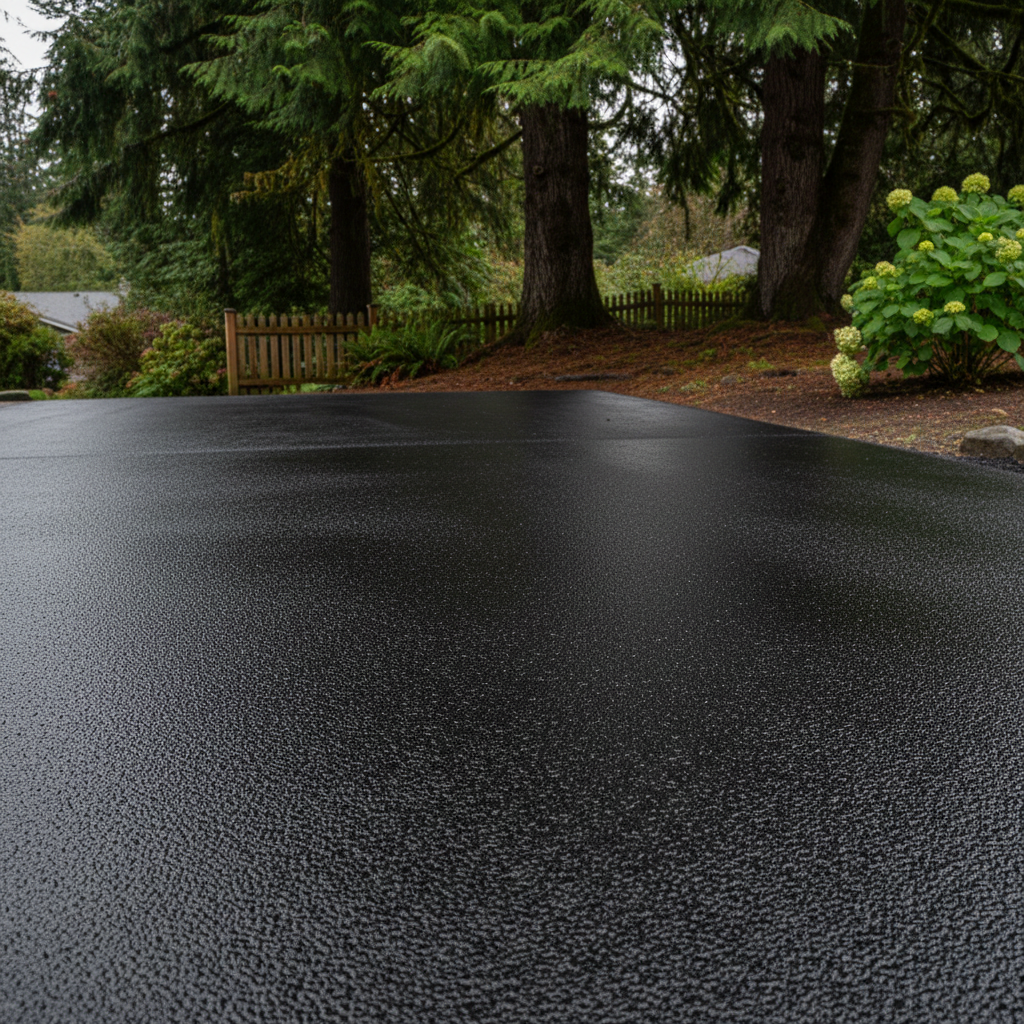
Alright, Seattle homeowners, let us cut to the chase about Slurry Coating. We see a lot of folks around here, especially in places like Ballard or West Seattle, trying to figure out the best way to keep their asphalt looking good and lasting long. Slurry Coating often comes up, and for good reason. There is also a lot of confusion out there. Summit Asphalt Solutions will lay out the real deal for you. Our team will answer the questions we hear most often from homeowners like you. This is what we have learned from years on the job.
What exactly is Slurry Coating, and how is it different from regular Sealcoating?
This is probably the biggest question. It is important to get it right. You can think of Slurry Coating as a heavy-duty cousin to Sealcoating. Both are protective layers for your asphalt. They are built differently and serve slightly different purposes.
- Slurry Seal: This is a cold-mix asphalt treatment. It is a blend of asphalt emulsion, water, fine aggregates like sand or very small crushed rock, and some chemical additives. It includes aggregate. This creates a new, durable wearing surface that is thicker and has a rougher texture than sealcoat. Slurry Seal is great for filling minor surface voids as well as small cracks. It also improves skid resistance as well as giving your pavement a fresh, uniform black look.
- Sealcoating: This is generally a thinner, liquid asphalt emulsion without significant aggregate. Its main job is to protect against UV damage as well as water penetration as well as oxidation. It gives a smooth, dark finish. Sealcoating is typically used on asphalt that is in pretty good shape. It just needs that protective layer as well as an aesthetic boost.
The key difference is that Slurry Seal has aggregate. This makes it thicker and more capable of addressing minor surface imperfections as well as providing a new wearing layer. Sealcoat is more about surface protection and appearance on already sound pavement.
When should I consider a Slurry Coat for my driveway in Seattle?
You should be looking at Slurry Coating when your asphalt is showing early signs of aging. It should not be falling apart yet. We are talking about minor cracks that are less than 1/8 inch wide. We are also talking about some fading. You might also see a bit of surface raveling where small stones are coming loose. It is a preventative maintenance treatment. It is not a structural repair. If you have big potholes or wide, deep cracks, those need to be repaired first. A Slurry Coat will not do much good otherwise.
How long does a Slurry Coat typically last in Seattle?
A properly applied Slurry Seal can extend the life of your asphalt by 5 to 7 years. Sometimes it can last up to 10 years. This depends on traffic and weather conditions in Seattle. The quality of the existing pavement also plays a big role. If it is applied to pavement in good condition, you will get more life out of it. This is more than if it is already in fair condition.
What is the process like for applying a Slurry Coat in Seattle?
It is not just slapping some stuff down. There is a specific process Summit Asphalt Solutions follows. This makes sure it sticks as well as lasts.
- Preparation is Key for Slurry Coating: Our team first cleans the surface thoroughly. We remove any dirt as well as debris as well as oil spots. Any larger cracks over 1/4 inch or potholes need to be filled and patched beforehand. This prep work is important for the slurry to bond correctly.
- Mixing and Application of Slurry Coating: The slurry mixture is prepared on-site in a specialized truck. It is then uniformly spread over the asphalt surface. This is usually done with a spreader box attached to the truck. Sometimes workers follow with squeegees to make sure there is an even coat.
- Curing the Slurry Coat: This is where patience comes in. The slurry needs time to dry and cure.
How long do I have to stay off my driveway after it has been Slurry Coated?
You will need to keep vehicles off your freshly coated driveway for a minimum of 24 to 48 hours. The surface might look dry in 4-6 hours. It takes much longer for it to fully cure. In Seattle, with our cooler, damp weather, it often takes closer to the 48-hour mark. Sometimes it takes even longer. Premature driving can cause tracking as well as tire marks as well as damage the new surface. This compromises its protective qualities. It is also a good idea to avoid sharp turns for the first few days. This helps it settle.
Can Seattle's weather mess with Slurry Coating?
Yes, it can. Weather is a big factor for any asphalt work around here. For Slurry Coating, you need consistent temperatures above 50°F (10°C) and rising. This is needed for both the air and the pavement. This temperature needs to last for at least 24 to 48 hours after application. Low humidity also helps because the slurry cures by water evaporation. This means we are typically looking at late spring through early fall for the best results. This is usually May to September. Applying it during colder or wetter periods can significantly extend drying times. It can also mess with the coating's durability. Rain is a no-go during application. If it is forecasted, Summit Asphalt Solutions will postpone the job. Our team is always keeping a close eye on the forecast, especially with our unpredictable Seattle drizzle.
Is Slurry Coating expensive? What is the typical cost in Seattle?
Slurry Coating is generally considered a cost-effective preventative maintenance tool. It is definitely less expensive than a full asphalt overlay or replacement. The cost can vary quite a bit. This depends on the size of your driveway. It also depends on its current condition as well as the specific type of slurry used. In Seattle, you might see costs ranging from around $0.66 to $1.08 per square foot for Slurry Seal application. For smaller residential driveways, some contractors might have minimum charges. You could also see project costs from $250 to over $1,200 for standard jobs. This is especially true for those under 1,000 square feet. Remember, this is an investment. It saves you money in the long run by delaying more expensive repairs down the road.
Are there any downsides or things to watch out for with Slurry Coating?
Yes, there are a few things you should know about Slurry Coating:
- Not a Magic Fix: It will not fix major structural issues. It also will not fix deep cracks or significant rutting. Slurry Coating is for preserving good-to-fair pavement.
- Loose Aggregate: For a little while after application, you might see some loose aggregate or small rocks on the surface. This is normal as the surface wears in. The contractor will usually sweep it up.
- Initial Tenderness: The surface is tender at first. Sharp turns or heavy braking can leave marks. Give it time to harden up.
- Messy Business: The wet slurry can be difficult to remove from clothing as well as shoes as well as even pet paws. So, stay clear until it is dry.
Ultimately, Slurry Coating is a solid option for extending the life as well as improving the look of your asphalt driveway. This is especially true with Seattle's wet climate as well as freeze-thaw cycles. Just make sure you are working with someone who knows what they are doing. They also need to understand the local conditions.